Thailand is a shopper’s paradise — floating markets, night bazaars, malls, and street stalls everywhere you look. But the same place can quote two very different prices depending on who’s asking. Here’s how to shop smart, bargain without stress, and always know what you’re really paying.
Where to shop
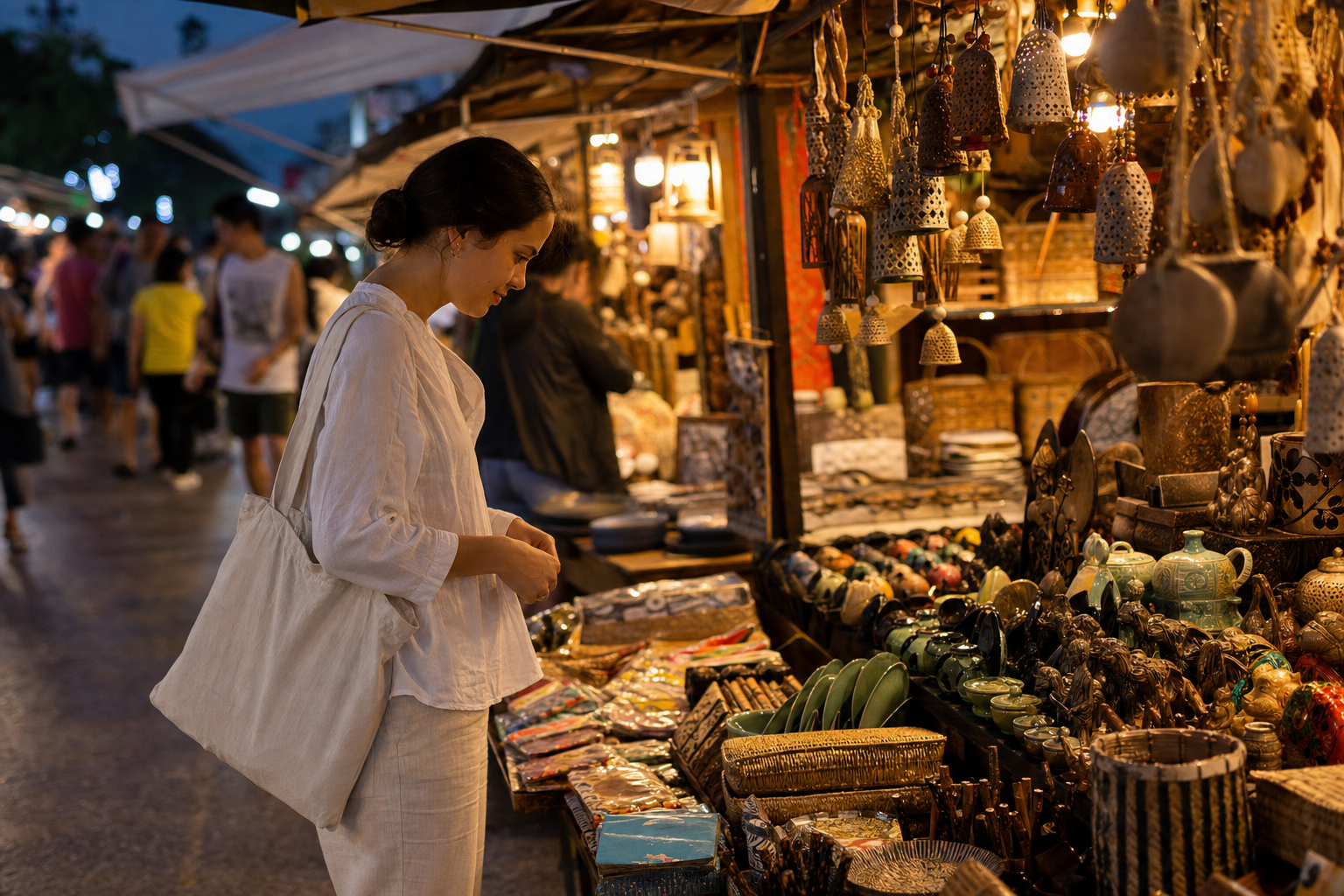
Night markets (like Chiang Mai’s Night Bazaar or Bangkok’s Rot Fai) are best for souvenirs, clothes and street food. Weekend markets such as Chatuchak are huge — go early to beat the heat and crowds. Malls have fixed prices and are good for electronics and air-conditioned breaks.
Bargaining the Thai way
Haggling is expected at markets, not in malls. Keep it friendly — a smile goes a long way in Thailand. A reasonable opening counter is around 50–70% of the first asking price, then meet somewhere in the middle. Walking away politely often gets you the best price.
Know the real price instantly
Baht prices add up fast, and doing the math in your head while a vendor watches is stressful. Keep Currencies open and just type the number — you instantly see the amount in your home currency, so you bargain with confidence and spot when something’s a tourist markup. It works offline too, which matters in a market with no signal. Free your brain from mental math and focus on the fun part.
Avoiding tourist prices
- Check a mall or fixed-price shop first to learn the “real” range before hitting markets.
- If a stall has no prices shown, expect the first quote to be inflated.
- Buying several items? Ask for a bundle discount.
Get Currencies on the App Store
Frequently asked questions
Is bargaining rude in Thailand?
No — at markets it’s expected and friendly. Just keep it light and smiling; don’t haggle in fixed-price malls.
How do I avoid paying tourist prices?
Learn the typical price range at a fixed-price shop first, and convert quotes to your own currency to judge them quickly.
Can I convert baht without internet?
Yes — apps like Currencies cache rates so you can convert offline in any market.